
War Dance
- Sculpture
- resin composite
- Ref: 529708
£ 9,900.00
War Dance
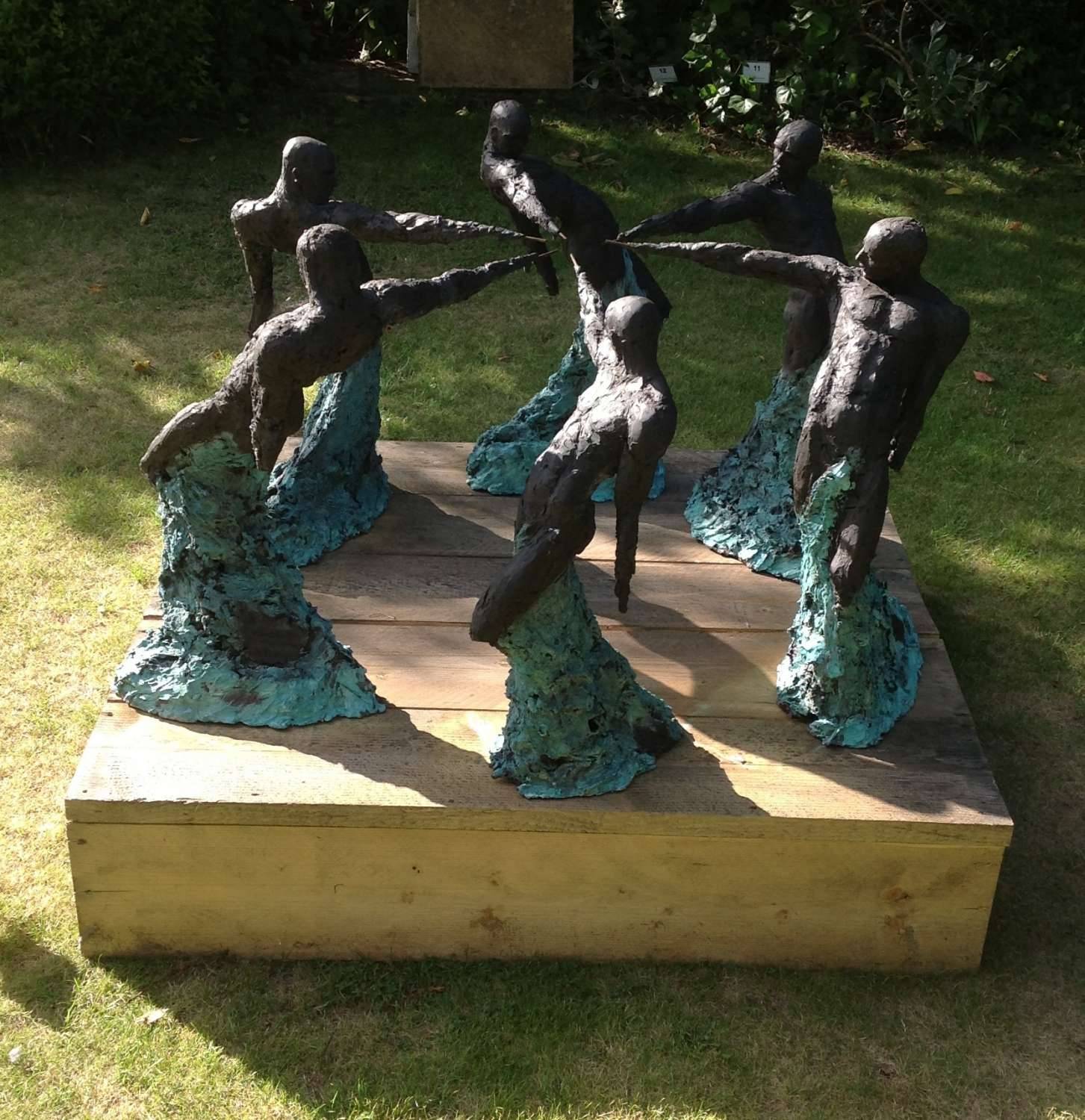
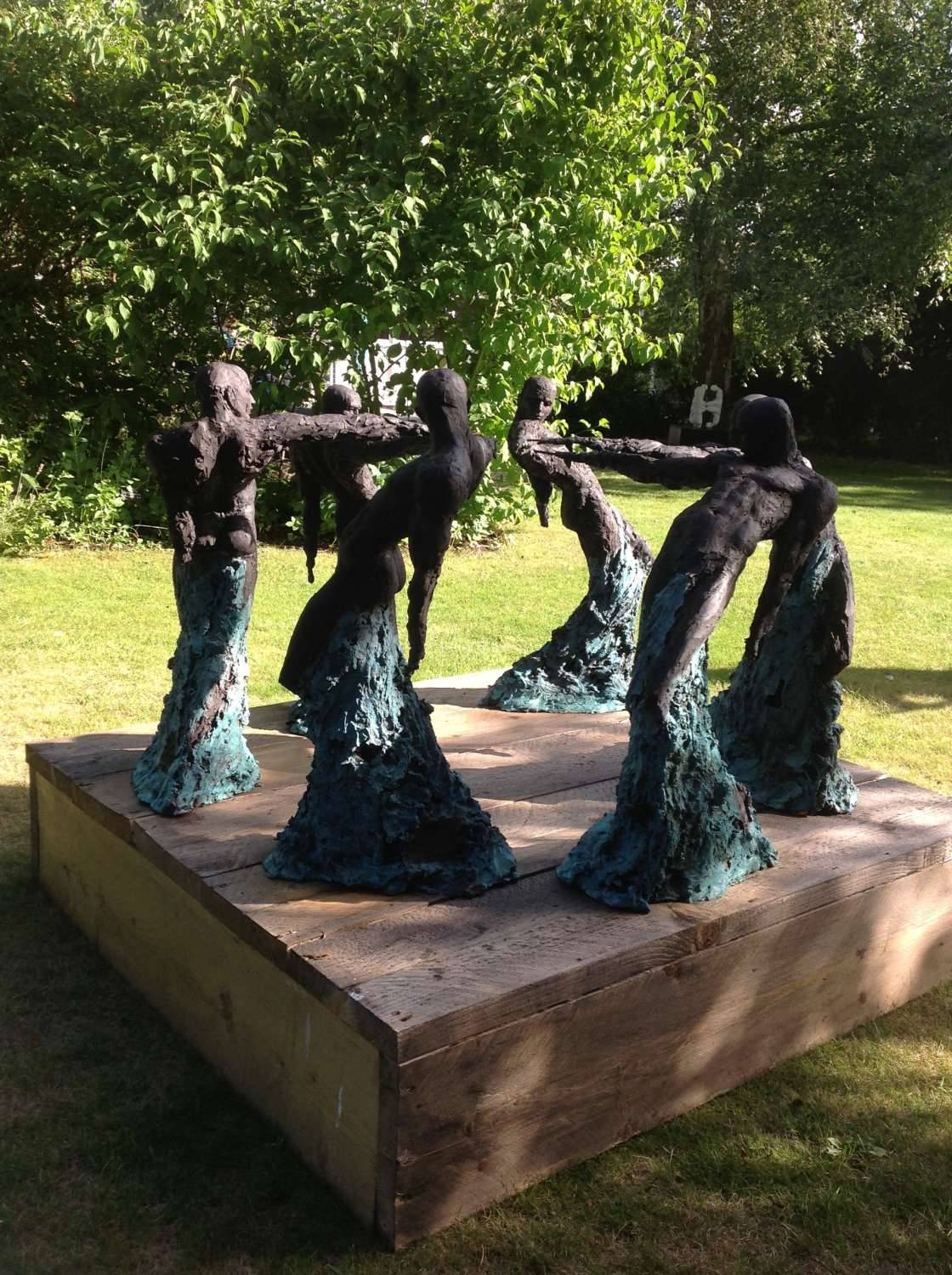
War Dance is a sculptural meditation on conflict, power and the cyclical nature of violence. Comprising six uniquely modelled male figures arranged in a circle, the work captures a moment of perpetual tension. Each figure appears to take aim at another, creating a closed system in which every participant is both potential aggressor and potential victim.
The title references traditional war dances performed across many cultures as rituals of preparation, unity and strength. Yet rather than celebrating warfare, the sculpture questions its purpose and consequences. The figures exist in a state of suspended action, poised on the brink of violence. Should any one of them act, the consequences would reverberate throughout the entire circle. No victor could emerge. Instead, the work highlights the profound futility of conflict and the losses borne by all involved.
Constructed in black clay with copper-infused bases, the figures appear to rise from the earth itself, their forms simultaneously fluid and fragile. Their elongated gestures create an invisible web of tension, binding each figure to the next in a cycle from which none can escape. The circular composition evokes ritual, repetition and inevitability, suggesting how cycles of hostility can become embedded within cultures, histories and identities.
At its heart, War Dance reflects on humanity's enduring tendency towards division and confrontation. It asks whether conflict is an unavoidable aspect of human nature or a pattern that we continue to repeat despite understanding its consequences. The work serves as both a warning and a lament, reminding us that in war there are rarely true winners—only varying degrees of loss.
War Dance
War Dance is a meditation on the futility of conflict and the shared consequences of violence. Six figures stand in an unbroken circle, each directing an arm towards another as though aiming a weapon. No single figure is identified as aggressor or victim; each occupies both positions simultaneously. The work offers no clear beginning or end, only a closed system in which every action inevitably returns to the person who initiated it.
Emerging from textured forms that evoke the earth itself, the figures appear rooted within the very ground from which conflict arises. Their stripped, elemental bodies remove all signs of nation, rank and ideology, leaving only the vulnerable human form. In doing so, the sculpture shifts attention away from politics and towards the universal cost of violence.
Rather than depicting a specific war, War Dance reflects on the cycles of fear, retaliation and mutual destruction that continue throughout history. The circular composition suggests that no one stands outside the consequences of conflict; once violence begins, all become participants in its outcome. The work ultimately asks whether humanity can recognise its shared vulnerability before the cycle is repeated once again.
At its heart, War Dance is not about victory or defeat, but about interdependence. It proposes that every act of violence reverberates through the whole human community, reminding us that there are no true winners in war—only different ways of carrying its consequences.